Articles by "information"
2020 agriculture air air pollution alien Amazing android animals apes app Archaeology Arctic circle ash dieback Atmosphere Attack Australia bacteria BBC beautiful beauty biodiversity biology Canada case studies causes chalk writing chernobyl disaster china climate climate change conservation conserve convenient coronavirus cosmic countries COVID 19 cryosphere cyclones difference earth earth day earth hazards EarthScience EC TALKS Ecology ecowatch Ecowatch education effects electric cars electricity endangered species energy engineers env issues env management env news environment Environmental Science evidence Evolution Evolutionary Biology ezymes facts Fanal fear fear of failure fires food forest forset fossil & ruins galaxies garbage global problem gorillas greece green revolution greenland Human Evolution hurricanes hydraulic press ice impacts Incredible industrial revolution information insects interesting facts invaders IPCC italy land land pollution landscapes light lockdown Locusts locusts v/s grasshopper loss Madeira mammals marine motivation mouse Mutation mystery nano scale NASA national geographic Nature Newyork Nitrogen dioxide NMR noise noise pollution ocean oceans oil spill old trees olive orangutans pacific Pakistan pandemic park peace petrochemicals photography Pink lakes planet plants plastic plastic pollution playstore poem pollution ponder protect Rachel Summer rain forest Ramadan kareem recycling renewable research researchers rodents Russia safe practices SAS satisfaction save science situation size social distancing Solar system solution solutions Soothing south korea stars statistics success symptoms technology the Azores the Canary Islands think tank treatment tree planting trees Turtles types UK UK govt ukraine UNESCO US virus water water pollution WHO wildfires wildlife William Wordsworth woodlands WWF Zoo zoology

I wandered lonely as a cloud
That floats on high o'er vales and hills,
When all at once I saw a crowd,
A host, of golden daffodils;
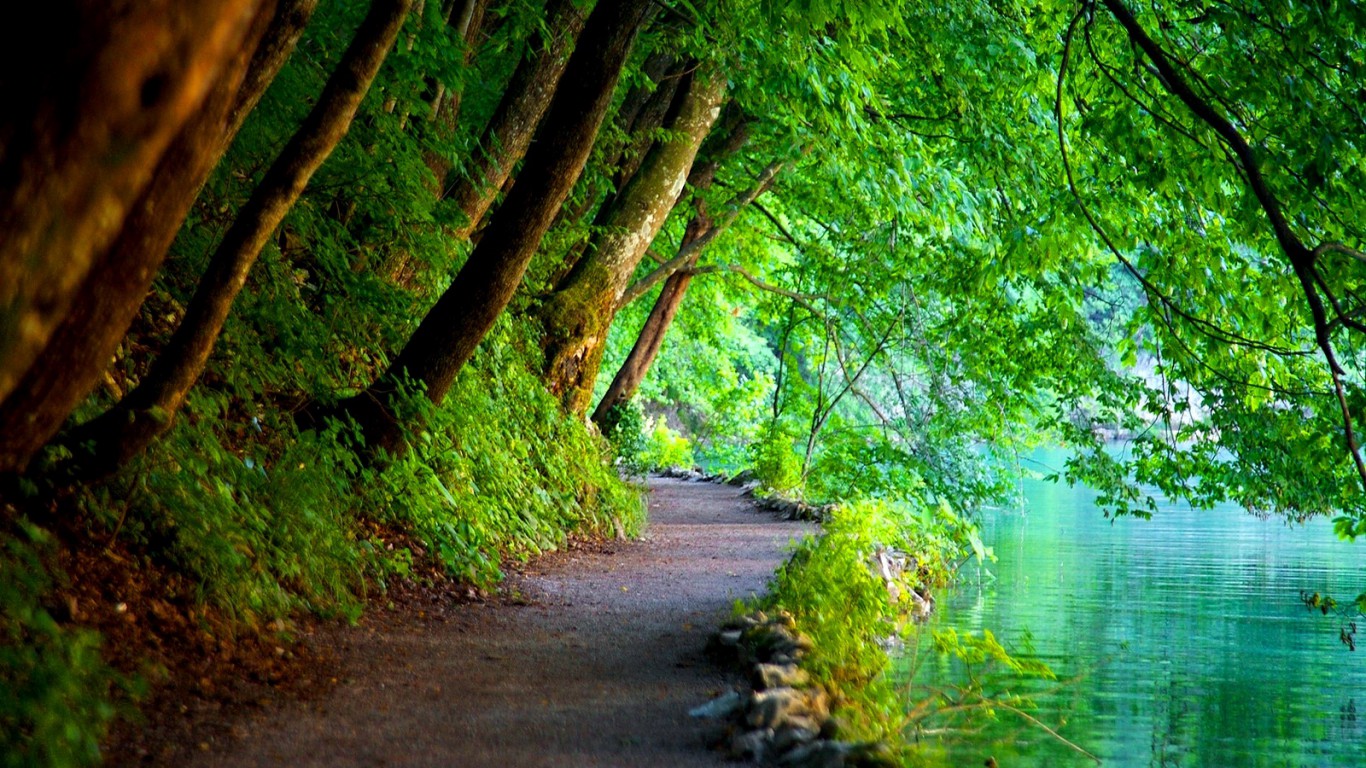
Beside the lake, beneath the trees,
Fluttering and dancing in the breeze.

Continuous as the stars that shine
And twinkle on the milky way,
They stretched in never-ending line
Along the margin of a bay:
Ten thousand saw I at a glance,
Tossing their heads in sprightly dance.

The waves beside them danced; but they
Out-did the sparkling waves in glee:
A poet could not but be gay,
In such a jocund company:
I gazed—and gazed—but little thought
What wealth the show to me had brought:

For oft, when on my couch I lie
In vacant or in pensive mood,
They flash upon that inward eye
Which is the bliss of solitude;
And then my heart with pleasure fills,
And dances with the daffodils.

~William Wordsworth


As we know our dear Planet; Earth, was facing pandemic of the century, COVID-19 and its still facing it because we have not totally recovered from this pandemic situation. No vaccine has been reported to cure this disease till now. Although several home remedies and precautionary measures are taken to protect ourselves from catching this virus till now. This harmful disease was spreading day by day and the only thing believed to prevent its spread, was lock down. 

Although, we succeeded in this effort but like a coin this situation also had two sides i.e. positive and negative. So, let's talk about this. You just have to spare a few minutes from your busy routine and give this article a quick read. In this article, we are going to explain these two aspects in detail, which are playing significant role in current situation.


POSITIVE IMPACT OF COVID 19

The following are some positive impacts on the planet and humanity;

1. The Environment

The first positive aspect of COVID-19 is the effect on the environment.  Carbon emissions are down globally and with manufacturing and air travel grinding to a halt, the planet has had a chance to rejuvenate.

China recorded an 85 per cent increase in days with good air quality in 337 cities between January and March. With tourists gone from Italy, the long-polluted canals of Venice now appear clear as fish and other wildlife start returning. Elsewhere, wildlife is also reappearing in other major cities and the biodiversity is slowly starting to return in various parts of the world.

2. Peace

The coronavirus is also raising hopes of fewer battles and less conflict, resulting in increased levels of peace. The United Nations called to end all wars in the face of COVID-19 as the world confronts a common enemy: “It’s time to put armed conflict on lockdown,” stated Secretary-General António Guterres.

3. Connectedness

A third positive outcome is a rejuvenated sense of community and social cohesion. Self-isolation challenges us as social animals who desire relationships, contact and interaction with other humans.

However, people all around the world are finding new ways to address the need for interconnections.  In Italy, one of the worst-hit countries, people are joining their instruments and voices to create music from their balconies. People are leading street dance parties while maintaining social distancing.

4. Innovation

COVID-19 is a major market disruptor that has led to unprecedent levels of innovation. Due to the lockdown, so many businesses have had to reinvent themselves with a new 'business as unusual' philosophy.

This includes cafes turning into takeaway venues (some of which also now sell milk or face masks) and gin distilleries now making hand sanitizers.

Many businesses have had to undergo rapid digitization and offer their services online. Some could use this wave of innovation to reimagine their business model and change or grow their market.

5.  Reimagined Education

The fifth positive outcome is massive transformation in education. True, most of it was not by choice. With schools closing down all around the world, many teachers are digitalising the classroom, offering online education, educational games and tasks and self-led learning.

NEGATIVE IMPACT OF COVID 19

The following are some negative impacts on the planet and humanity;

1. Economy

The impact of the disease on society and economy can be witnessed from the lockdown of cities all over the world, labor mobility restrictions, travel bans, airline suspensions, and most importantly slowdown of the economy.
Due to the global outbreak of COVID-19, the global GDP is likely to be affected between 2.3% to 4.8% (ADB, 2020). Additionally, it has also been predicted that the current pandemic outbreak may cause global foreign direct investment to shrink by 5%–15% (UNCTAD, 2020b).

2. Unemployment

The second most important negative impact of COVID 19 is unemployment. The rate of unemployment is increased rapidly. As this situation is faced globally. So, for the developed countries this lockdown thing and work from might worked. And they had managed somehow. 
But, for the developing countries, this situation was the most difficult. Because they don't have enough resources. There are a number of people who on daily wages. And they get their wage when they will work. But during lockdown there was no work for them. They couldn't go outside. 

3. Loss of life 

The most worst effect of Covid 19 on humanity is the loss of the lives of so many innocent people. Globally, 30.8 M cases are reported till date and out of 30.8 M cases 957 K people died. 
The top ten most affected countries of Covid 19 are USA, Italy, Spain, Germany, China, France, Iran, UK, Switzerland and Turkey.

By accounting both sides of the same coin, we came to the conclusion that this pandemic situation is like the phrase of  Darwin's Evolutionary theory 
Survival of the fittest

We are saying that we got time to spent with our families during lockdown and all. But we are saying that because we are alive now. We managed to survive this situation till now and for that we should be thankful to our Lord. 

But just for once think about those who have lost their loved ones, families and everything due to Covid 19. This pademic has changed their lives completely, there is huge difference in their lives after this lockdown. This 6 months time period was the most horrible time for them. 

If you are alive today and reading this article and doing all your routine work. Then be thankful to God. And value your life and use your energy in some positive way. 

- Your Blogger


HELLO WORLD!

Here is your blogger again with a new and interesting article. Besides being interesting and new, this article is very important. As the title indicates, yes you have guessed it right. Today, we will talk about failure and all the fears related to it. So let’s begin!

Basically, what is failure?

Failure is the state or condition of not meeting a desirable or intended objective, and may be viewed as the opposite of success.”
Failure is when you are unable to achieve your intended goal that you might have planned as your future goals. And no doubt may be you have done a whole lot of hard work to pursue your goals. But you couldn’t. Why that’s another long debate. Hold on don’t worry we will talk about it as well but some other day.

Let’s start this important topic!

Atychiphobia is basically the fear of failure. It’s a state when one allows one’s fear to stop him/her from achieving his/her goals. This fear never ever in your life let you do anything productive. Rather takes you towards depression, anxiety, irrational state and disturbed and jumbled up mindset.

SYMPTOMS

Everyone in their life at some extent does have or had a fear of failure. If not always it can be just at some points. You may experience some or all of these symptoms if you fear of failure;
  • Hesitation to try out new things or to get involved in challenging situations
  • Self-sabotage – for example procrastination, excessive, or a failure to follow through with goals.
  • Low confidence or self-esteem- as you think negatively about yourself that you will not be able to achieve your desired goal or it will not end in the way I have planned.
  • Reluctance to go through trial and error phase.
  • Perfectionism- a willingness to try only those things that you might end perfectly and you are already an expert in it.
  • You don’t want to do adventure in your life.
CAUSES
To talk about causes, we all need to know a clear definition of failure. We all might have our own definition of failure. Failure has a broad spectrum of definitions, depending upon everyone’s perspective. Failure to one person might be a great learning experience for another person. So it all depends upon your views and ideas. The following are the causes of failure according to my perspective;
  • Unsupportive parents can be the cause of your failure.
  • Pressure of responsibilities might be the cause of failure. Because when you have responsibilities then you try to do the things in which you are already an expert. That’s due to the fact that you don’t wants to take risk for your family.
  • Our number one cause of fear of failure can be due to our prioritization of this society. We have made society so big deal that we can’t think now likes an individual. Instead we think in terms of society, that if we will do this what will happen and if I/we  got failure then hat society will thing about me/us.
  • Negative people are also a big cause of your fear of failure. These people will never let you succeed. Because they will continue to criticize you. They will degrade you in every situation.
  • Or sometimes lack of guidance or information can be the cause of fear of failure. Because you might be the eldest one in your family and home. That’s why you are already stressed about the fact that as per our society if you are the eldest one so you will set an example whether good or bad.
  • Situation can be opposite, you might be the youngest one or the mid one and you have to follow the examples set by the elders. This can also be a huge pressure on you and can lead you towards hesitancy to try it.  

SOLUTION

Here are some important steps that you all must follow if you really want to get rid of your fear of failure;
  • Self-realization of the fact that if you are starting something then it can end up with success as well as failure. Because this is the same case like the two sides of coin, there are also two possibilities.
  • Avoid negative people- because they will never let you overcome your fear.
  • Stay positive- always think positive and stay with positive people. Because a person is always identified from his/her company/ companions.
  • Let society think whatever they want to.
  • Do whatever you want to do without following anyone else’s ideas.
  • Analyze all the potential outcomes- this will also help you to overcome your failure as you have the fear of unknown. So, when you will analyze the outcomes then there will be no reason to be afraid of.
  • Think strategically- that if this plan (plan A) will fail then you can execute your plan B or C. In this way you will never be afraid of failure because you will already have backup plans.
  • Always start from small steps- instead of taking a big step and facing failure. Plan to achieve your goals and manage your plan strategically. Always start step by step and start your journey towards the achievement of your ultimate goal by taking small steps.
  • Practice trial and error- life is full of trials and errors phases. Try new things and explore new opportunities and new experiences.
  • Take risk.
  • Take everything as an opportunity.
These are all the steps that will help to improve your personalities as well. But these are all the things that are useless until or unless we really practice it in real. And only You, We and I can do it, keep remember no one else is going to come and help us. So start loving yourself.

Keep in mind!

You are beautiful from inside and out. You can do it. Because you the most super talented person in this World!

GLOSSARY

  • Self-sabotage is when we actively or passively take steps to prevent ourselves from reaching our goals.
  • Procrastination is the action of delaying or postponing something.

NOTE
The purpose of this article is to draw attention to this side that hinders your way towards the success. I hope this article really motivated you and helped you to overcome your fear or at least you start thinking to try it.
-       ­BY NAINA SYED (YOUR BLOGGER)

The entire country is under the threat of an attack by desert locust but around 37% area of Pakistan is more vulnerable to the attack. This includes 60% area of Balochistan, 25% area of Sindh and 15% area of Punjab.

“If the desert locust is not contained, Punjab and Sindh may become summer breeding zone of the pest,” said a report submitted to the Supreme Court by Punjab government through Additional Advocate General Chaudhry Faisal Hussain.
It said desert locust appeared in Punjab’s Cholistan area in July last year. In November last year, locust swarms started migration toward Balochistan and South Punjab.
“So far crops over an area of 715 acres in Punjab have been damaged,” it said.
According to the report, the federal government is responsible to control desert locust but the province of Punjab has managed to contain locust despite limited resources. “However, Sindh, Balochistan and Khyber Pakhtunkhwa (K-P) provinces face immediate threat of a locust attack,” it added.
The report also highlighted vulnerability along borders with Iran and India and unavailability of correct resources like micron spray machines.
It said Punjab’s Bahawalpur district will be a major battlefield in the summer and swarms will be coming from Sindh and Indian Rajasthan due to wind storm before December.
"There is an immediate need for deployment of maximum resources in summer breeding area. Punjab has 15 percent area falling mainly in Cholistan but now vulnerability has extended to the central and North Punjab due to climate change and massive egg-laying. "
It said Punjab has arranged helicopters for spraying in South Punjab region but the same method should be employed in the other provinces.
According to the report, 50 micron sprayers, 5 airplanes and 50 entomologists are urgently required to support surveillance and combat operations in Punjab.
An apex court bench will resume hearing of case on Monday
Army chief General Qamar Javed Bajwa on Thursday also reiterated that the army would make all possible resources available to help the civil administration combat the threat posed by locust attack.
“Effective control operations are essential for ensuring food security in the country and in mitigating the negative economic impact [of pest plague],” the army chief said during a visit to the National Locust Control Center (NLCC) in Rawalpindi
According to a statement issued by the Inter-Services Public Relations (ISPR), NLCC Chief Coordinator Lt Gen Moazzam Ejaz briefed the army chief about the efforts undertaken to counter the threat. General Qamar appreciated the NLCC role in synergizing national efforts in line with the National Action Plan.
The government has already declared a national emergency in this regard as hopper bands of the Schistocerca gregaria – commonly known as the desert locust – have already devoured large quantities of crops in over 60 districts of all the provinces.
These insects, mainly originating from deserts, eat anything from bark to seeds and flowers while travelling up to a speed of 149km a day.
The region saw first wave of locust invasion in May last year since 1993. According to the UN Food and Agriculture Organisation (FAO), Pakistan’s 38% of agricultural fields are breeding grounds for the insects.
On Friday, Punjab Chief Minister Usman Buzdar also took an aerial view of Rahim Yar Khan, Rojhan, Bhong, Sadiqabad, Kot Sabzal and other areas to review the damage to crops caused by locust attack.
The chief minister issued necessary directives to the Provincial Disaster Management Authority (PDMA) director general (DG) to avert further damage during the helicopter surveillance of the destroyed fields.
Buzdar ordered the authorities concerned to take every possible step to counter locusts that are wreaking havoc all over the province. “Saving crops from locusts is the top priority of the government as it threatens food security of the country,” he said.

LOCUSTS V/S GRASSHOPPERS

Locusts and grasshoppers are the same in appearance, but locusts can exist in two different behavioral states (solitary {done or existing alone.} and gregarious{(of a person) fond of company; sociable.}), whereas most grasshoppers do not. When the population density is low, locusts behave as individuals, much like grasshoppers. However, when locust population density is high, individuals undergo physiological and behavioral changes, known as phase polyphenism ( Locusts are grasshoppers that can form dense migrating swarms through a phenomenon known as locust phase polyphenism) , and they form gregariously behaving bands of nymphs or swarms of adults.
In addition to changes in behavior, phase change may be accompanied by changes in body shape and color, and in fertility, physiology and survival. These changes are so dramatic in some species that the swarming and non-swarming forms were once considered to be different species.  The scale of population increase and migrations also distinguish those species known as locusts from grasshoppers.
The distinction between locusts and grasshoppers is often not clear-cut, as the extent to which different species exhibit gregarious phase characters is graded. The migratory locust has all of the features associated with phase change - differences in body shape and color, fertility and gregarious behavior in both the nymph and adult life stages, forming dense bands and swarms. The Australian plague locust also forms dense nymph bands and adult swarms, but does not exhibit changes in body color. Spur-throated locust (The spur-throated locust is a native Australian locust species in the family Acrididae and a significant agricultural pestnymphs do not form bands and the adults do not lay eggs gregariously, but they do form dense swarms.
Some species that are called grasshoppers, such as Austroicetes cruciataOedaleus australis and Peakesia spp. can form loose swarms at high densities, but do not generally migrate long distances as locusts do.


The document plans for a massive expansion in offshore wind

Greenpeace has joined a growing list of organisations demanding that the UK government puts protecting the environment at the heart of any post-Covid-19 economic stimulus package.

The campaign group has produced a detailed "manifesto" with measures to boost clean transport and smart power.
The document follows a comparable call from some of Britain's most powerful business leaders earlier this week.
Last week, the prime minister also expressed a similar ambition.
Boris Johnson said he wanted to see a "fairer, greener and more resilient global economy" after Covid-19 and that "we owe it to future generations to build back better".
The manifesto also contains measures to support the protection of nature, green buildings and the creation of an economy in which virtually everything is reused.
Greenpeace says the crisis has given Britain a "once in a lifetime" opportunity to transform life, travel and work.
It added that the plan would create hundreds of thousands of secure jobs.

Green business

On Monday, more than 200 chief executives of some of the UK's top firms - including HSBC, National Grid, and Heathrow airport - signed a letter to the prime minister asking him to use the Covid-19 lockdown as a springboard to "deliver a clean, just recovery".
Many people may be surprised how similar the recommendations of these two very different interest groups are.
  • Both Greenpeace and the chief executives are asking the government to prioritize investments in low carbon technologies and calling for the de-carbonization of the British economy to be speed up
  • Both say they want to see a focus on sectors that best support the environment
  • Both are demanding that financial support for ailing businesses must come with a requirement for them to commit to take action to reduce their impact on the environment.
Greenpeace's manifesto is, however, considerably more detailed.
It is a 62-page document with specific policy, spending and tax measures covering most of the British economy.
It calls on the government to deliver its net zero emissions commitment five years early, before 2045.

Controversial policies

Many voters say they support tackling climate change when polled.
However, lots of the policies Greenpeace proposes would prove very controversial.
For example, motorists say they are ready to change their behaviorBut, says Greenpeace, tough policies like these are essential if the government is going to take meaningful action to tackle climate change.
"The choices our government makes now will define… whether or not we succeed in the fight against the climate emergency", says John Sauven, executive director of Greenpeace.
"If we fail to get this right, we may never get another chance. Now is the time for a green recovery, and for that we need action not words."
It says there would be huge dividends in terms of job creation, should its programme be adopted.
Greenpeace calculates that its plans would create hundreds of thousands of new high-skilled jobs as well as helping to level up inequalities between communities in the UK.

Unique opportunity

The UK government has already indicated that protecting the environment will feature heavily in any stimulus package.
Back in April, Boris Johnson said a post-Covid-19 recovery plans should include efforts to "turn the tide on climate change".
Meanwhile, the European Union has unveiled what it called the biggest "green" stimulus in history.
Last week, it said it planned to commit a whopping €750bn (£667bn; $841bn) to its recovery package.
Add in spending from future budgets and the total financial firepower the European Commission says it will be wielding is almost €2tn (£1.8tn; $2.2tn).
Fighting climate change is at the heart of the bloc's recovery from the pandemic.
There will be tens of billions of euros to make homes more energy efficient, to de-carbonize electricity and phase out petrol and diesel vehicles.
The idea is to turbo-charge the European effort to reduce carbon emissions to net zero by 2050.
"If we do not do it, we will be taking much more risk," Teresa Ribera, deputy prime minister of Spain, told the BBC.
"The recovery should be green or it will not be a recovery, it will just be a shortcut into the kind of problems we are facing right now." to improve air quality, according to a recent AA survey.
But many drivers may balk at Greenpeace's proposals to radically redesign the road network to favor walking and cycling, at the suggestion that petrol and diesel cars are banned by 2030 or that fuel duty is steadily increased.
Many homeowners might be reluctant to spend money to upgrade their properties to meet tough energy efficiency standards.
At the same time, many local communities are likely to resist the plan for a big increase in onshore wind and solar power to complement a proposed massive expansion of offshore wind farms - few things unite local communities like a proposal to put in an array of wind turbines.
SOURCE: By Justin Rowlatt, Chief Environment correspondent
DATE: 4th JUNE, 2020


Hello World! Here is your blogger again after a long time with an interesting hot topic. As today, we all are more concerned about Nature, Environment and its biological diversity. And we all want to save them. But the thing is that we all are unaware of the importance and the basic knowledge of Nature. So, in this article I’ll highlight the real facts, importance, uses, benefits, beauty, inter-relationships of Nature and the difference between Nature and Environment. I hope you guys will be excited. The purpose of this article is to provide you all with the true crux of Nature which will help us to aware ourselves and others. So let’s start with the ride to the Nature.
“The phenomena of the physical world collectively, including plants, animals, the landscape, and other features and products of the earth, as opposed to humans or human creations”.

Nature, in the broadest sense, is the natural, physical, or material world or universe. "Nature" can refer to the phenomena of the physical world, and also to life in general. The study of nature is a large, if not the only, part of science. Although humans are part of nature, human activity is often understood as a separate category from other natural phenomena.
The word nature is derived from the Latin word natura, or "essential qualities, innate disposition", and in ancient times, literally meant "birth". In ancient philosophy, Natura is mostly used as the Latin translation of the Greek word physis (φύσις), which originally related to the intrinsic characteristics that plants, animals, and other features of the world develop of their own accord.
Within the various uses of the word today, "nature" often refers to geology and wildlife. Nature can refer to the general realm of living plants and animals, and in some cases to the processes associated with inanimate objects—the way that particular types of things exist and change of their own accord, such as the weather and geology of the Earth. It is often taken to mean the "natural environment" or wilderness—wild animals, rocks, forest, and in general those things that have not been substantially altered by human intervention, or which persist despite human intervention. For example, manufactured objects and human interaction generally are not considered part of nature, unless qualified as, for example, "human nature" or "the whole of nature". This more traditional concept of natural things that can still be found today implies a distinction between the natural and the artificial, with the artificial being understood as that which has been brought into being by a human consciousness or a human mind. Depending on the particular context, the term "natural" might also be distinguished from the unnatural or the supernatural.

IMPORTANCE OF NATURE IN OUR LIVES


Everything humans have needed to survive, and thrive, was provided by the natural world around us: food, water, medicine, materials for shelter, and even natural cycles such as climate and nutrients. Scientists have come to term such gifts ‘ecosystem services’
The rise of technology and industry may have distanced us superficially from nature, but it has not changed our reliance on the natural world: most of what we use and consume on a daily basis remains the product of multitudes of interactions within nature, and many of those interactions are imperiled. Beyond such physical goods, the natural world provides less tangible, but just as important, gifts in terms of beauty, art, and spirituality. Here is a selective sampling of nature’s importance to our lives;
  • Fresh water: There is no physical substance humans require more than freshwater: without water we can only survive a few hellish days. While pollution and overuse has threatened many of the world’s drinking water sources, nature has an old-fashioned solution, at least, to pollution. Healthy freshwater ecosystems—watersheds, wetlands, and forests—naturally clean pollution and toxins from water. Soils, microorganisms, and plant roots all play a role in filtering and recycling out pollutants with a price far cheaper than building a water filtration plant. According to research, the more bio-diverse the ecosystem, the faster and more efficiently water is purified.
  • Pollination: Imagine trying to pollinate every apple blossom in an orchard: this is what nature does for us. Insects, birds, and even some mammals, pollinate the world’s plants, including much of human agriculture. Around 80% of the world’s plants require a different species to act as pollinator. In agriculture, pollinators are required for everything from tomatoes to cocoa, and almonds to buckwheat, among hundreds of other crops. Globally, agricultural pollination has been estimated to be worth around $216 billion a year. However large such monetary estimates don’t include pollination for crops consumed by livestock, bio-fuels, ornamental flowers, or the massive importance of wild plant pollination.

  • Seed dispersal: Much like pollination, many of the world’s plants require other species to move their seeds from the parent plant to new sprouting ground. Seeds are dispersed by an incredibly wide-variety of players: birds, bats, rodents, megafauna like elephants and tapir, and even, researchers have recently discovered, fish. Seed dispersal is especially important for tropical forests where a majority of plants depend on animals to move.
  • Pest control: A recent study found that bats save US agriculture billions of dollars a year simply by doing what they do naturally: eating insects, many of which are potentially harmful to US crops. Almost all agricultural pests have natural enemies, along with bats, these include birds, spiders, parasitic wasps and flies, fungi, and viral diseases. The loss, or even decline, of such pest-eating predators can have massive impacts on agriculture and ecosystems.
  • Soil health: The ground under our feet matters more than we often admit. Healthy fertile soil provides optimal homes for plants, while participating in a number of natural cycles: from recycling nutrients to purifying water. Although soil is renewable, it is also sensitive to overuse and degradation often due to industrial agriculture, pollution, and fertilizers. Natural vegetation and quality soil also mitigates excessive erosion, which can have dramatic impacts from loss of agricultural land to coastlines simply disappearing into the sea.
  • Medicine: Nature is our greatest medicine cabinet: to date it has provided humankind with a multitude of life-saving medicines from quinine to aspirin, and from morphine to numerous cancer and HIV-fighting drugs. There is no question that additionally important medications—perhaps even miracle cures—lie untapped in the world’s ecosystems. In fact, researchers estimate that less than 1% of the world’s known species have been fully examined for their medicinal value. However the ecosystems that have yielded some of the world’s most important and promising drugs—such as rain forests, peat swamps, and coral reefs—are also among the most endangered. Preserving ecosystems and species today may benefit, or even save, millions of lives tomorrow. 

  • Fisheries: Humankind has turned to the rivers and seas for food for at least 40,000 years but probably even longer. Today, amid concern of a global fishery collapse, more than a billion people depend on fish as their primary source of protein, many of them among the global poor. Fisheries also provide livelihoods, both directly and indirectly, for around half a billion. Coral reefs, mangroves, and sea grass ecosystems provide nurseries for the world’s fisheries, while the open ocean is used for migrating routes and hunting. Even with the direct importance of the world’s fisheries for food, stewardship has been lacking, allowing many populations to drop precipitously and still permitting ecologically destructive fishing. While the world’s fisheries are primarily threatened by over fishing, including bycatch, marine pollution is also a major problem.
  • Biodiversity and wildlife abundance: The argument to save the world’s wildlife has often come from an aesthetic point of view. Many conservationists have fought to save species simply because they like a particular species. This is often why more popularly known animals—tigers, elephants, rhinos—receive far more attention than less popular (although just as endangered) wildlife—for example, the red belly egg frog, the smokey bat, or the bastard quiver tree. But beyond making the world a less lonely, less boring, and less beautiful place—admirable reasons in themselves—many of the services provided by biodiversity are similar to those provided by all of nature. Biodiversity produces food, fibers, wood products; it cleans water, controls agricultural pests, pollinates and dispersers the world plants; and provides recreation, such as bird watching, gardening, diving, and ecotourism.
  • Climate regulation: The natural world helps regulate the Earth’s climate. Ecosystems such as rain forests, peat lands, and mangroves store significant amounts of carbon, while the ocean captures massive amounts of carbon through phytoplankton. While regulating greenhouse gases are imperative in the age of climate change, new research is showing that the world’s ecosystems may also play a role in weather. A recent study found that the Amazon rain forest acted as its own ‘bioreactor’, producing clouds and precipitation through the abundance of plant materials in the forest.
  • Economy: In the common tension viewed between the economy and the environment—e.g. do we clear-cut a forest or conserve it?—one fact is often neglected: the environment underpins the entire global economy. Without fertile soils, clean drinking water, healthy forests, and a stable climate, the world’s economy would face disaster. By imperiling our environment, we imperil the economy. According to research published in Science, the global worth of total ecosystem services could run between $40-60 trillion a year.

  • Health: Recent research has found what nature-lovers have long expected: spending time in a green space, such as a park, provides benefits for one’s mental and physical health. Exercising in a park, instead of inside a gym, has shown to provide mental health benefits as a greater sense of well-being. Walking for 20 minutes in a green space has been proven to help children with ADHD improve their concentration, even working as well, or better, than medication. People who live in more natural settings have better overall health, even when research has taken into account economic differences.
  • Art: Imagine poetry without flowers, painting without landscapes, or film without scenery. Imagine if Shakespeare had no rose to compare Juliet to, or if William Blake had no Tyger to set alight. Imagine if Van Gogh lacked crows to paint or Durer a rhinoceros to cut. What would the Jungle Book be without Baloo or the Wind in the Willows without Mr. Badger? Imagine My Antonia without the red grass of the American prairie or Wuthering Heights without the bleak moors. How would The Lord of the Rings film series appear without the stunning mountain ranges of New Zealand, or Lawrence of Arabia without the desert of North Africa? There is no question that the natural world has provided global arts with some of its greatest subjects. What we lose in nature, we also lose in art.
  • Spiritual: While some of what nature provides us is measurable, most of what nature gives us is simply beyond measure. Economic measurements are useful; but as with most of what happens in the world, economics is simply incapable of capturing true worth. Science is also a useful measurement regarding the importance of nature, but once again cannot measure what nature means—practically and aesthetically—to each individual.


WHY IT’S IMPORTANT to VALUE NATURE?


The natural world is an incredible wonder that inspires us all. It underpins our economy, our society, indeed our very existence. Our forests, rivers, oceans and soils provide us with the food we eat, the air we breathe, the water we irrigate our crops with. We also rely on them for numerous other goods and services we depend on for our health, happiness and prosperity. 
These natural assets are often called the world's 'natural capital'. These benefits are also hugely important to the economy – from farming and forestry to leisure and tourism. If you add them all up, the total value of these benefits is phenomenal – at least US$125 trillion every year
Because nature is free, we often take it for granted and over exploit it. We clear forests, over fish oceans, pollute rivers and build over wetlands without taking account of the impact this will have. By not taking into account the benefits we get from nature, we create huge social and economic costs for ourselves.
We need to look at the value of nature in economic and social terms to help us better understand the full implications of the choices we make. Instead of making decisions based on short-term financial interests, we can look at the longer-term benefits for people and the economy-and of course nature itself. Using this argument, we're persuading governments and businesses to take better care of the natural world, so that it can continue to sustain us all into the future.

NATURE V/S ENVIRONMENT


We usually get confused between Environment and Nature. We sometimes use it together or in place of each other. But there is a huge difference in Environment and Nature. When we talk about Environment, it covers air pollutants, global warming, the greenhouse effect, and other dangers to the planet. It also includes a glossary of environmental terms as well as a brief directory of environmental organizations. It also includes energy crises, its consumption and much more. Basically it includes the impact of anthropogenic activities on environmental variables. While talking about Nature, we simply talk about the appreciation of beauty of Earth’s animals, plants and biodiversity. We don’t consider its crises.

Hope this article helped you a lot in understanding the true essence of Nature and the major difference between Nature and Environment.


MKRdezign

Contact Form

Name

Email *

Message *

Powered by Blogger.
Javascript DisablePlease Enable Javascript To See All Widget